RADF Guidelines and FAQs
Artists, arts workers and groups applying for a Regional Arts Development Fund grant are strongly encouraged to read the RADF Guidelines below and the frequently asked questions on this page before they begin their application.
Five different grant types are available through the RADF program and it is important to read the specific requirements of the grant you are applying for after reading the RADF program guidelines.
For all RADF related enquiries please contact the Arts and Cultural Grants Coordinator - Cairns Regional Council’s nominated RADF liaison officer.
- Phone (07) 4032 6603
- email: radf@cairns.qld.gov.au.
Ready to apply? Use this checklist before you begin
- I have read the following Council documents to ensure you understand the community's values, goals and Council’s priorities.
- I have referred to Arts Queensland for assistance with building a clear and compelling case for funding.
- I have considered whether my proposed activity will benefit the local community directly and/or indirectly.
- I have checked my eligibility and can confirm I meet three of the criteria
- I have read the Guidelines and Frequently Asked Questions by RADF applicants.
- I have reflected on ways my activity will develop my professional career as a creative.
- I have contacted the Arts and Cultural Grants Coordinator (Council’s RADF liaison officer) to discuss my proposal and intention to submit an application.
If you have answered 'yes' to all of these questions, you're ready to apply. Return to the top of the page to click through to the grant application form.
Additional resources
In-kind support includes volunteer labour, administrative support, rent-free accommodation or donations of materials or equipment. These contributions should be given a dollar value and must be included in your proposed budget.
The Cairns Regional Council Arts and Cultural Assistance (Individual) is available to individuals to access Council resources for their arts and cultural projects.
The Cairns Regional Council Arts and Cultural Assistance (Organisations) is available to organisations to access Council resources for their arts and cultural projects.
These grant programs are intended to:
- encourage the development of local community arts and cultural programs and activities
- foster opportunities for local arts and cultural activities that make a positive creative contribution to the region
- to make Council resources and capabilities available to support arts and cultural projects and activities.
Assistance of Council resources and/or services can be provided as a contribution to a project, activity or event, up to the grant amount. For example: permit application fees, facility booking fees, and Council venue hire.
- The funds will cover venue hire and resources cost only – not cash.
- The minimum amount per application is $500, the maximum amount per application is $5,000.
- Applications can be submitted at any time during the year.
- Applications should be lodged at least six to eight weeks prior to the start of the project, event or activity and details of each application must be discussed with the Arts and Cultural Grants Coordinator prior to submission.
Apply for an Arts and Cultural Assistance grant
RADF Frequently Asked Questions
FAQs and useful resources
Ask yourself these key questions when developing your activity:
- How does the project respond to and align with the RADF Key Performance Outcomes?
- Which activity do I want to do?
- Why do I want to do it?
- Which people will be involved?
- Do they have the skills to make it happen?
- Who in the community will benefit?
- How much will it cost?
- Where will I get the money and support from in addition to a RADF grant?
- Are other individuals being employed? If so, think of using employment contracts.
Your application should give a snapshot of a potentially successful activity. All information required is requested on the form, so:
- research thoroughly and prepare your proposal accurately and honestly
- provide all information on the official RADF Grant application form
- describe your activity in terms that relate to Council’s RADF Program.
Brief and clear support material strengthens your application. Include only relevant support material, such as:
- letters of support from community groups who will benefit
- letters of acceptance from a community Elder, workshop leader, project partner, gallery owner etc
- quotes from tradespeople, publishers or other businesses cited in your budget
- CVs of all professional arts and cultural workers employed in the activity with RADF funding.
Please note – support material will not be returned, so:
- provide online links to videos or music files or provide a dropbox link for larger files
- provide copies of all support material, if mailing your application (and keep the original).
Sign your application. Unsigned applications are not eligible for funding. Keep a copy of your completed application. If your application is successful, you will use it when you prepare your outcome report at the end of the activity.
RADF committees may want more information or support material if they are uncertain about an application. If this is the case, you will usually have a short time to respond.
Your CV should:
- be up-to-date in all personal and professional details
- show the important information on the first page
- start at the current year and work backwards to build a history of your employment or experience
- preferably be no longer than one A4 page.
Include the following information:
- your contact details
- education and qualifications
- current and past employment details
- community involvement
- awards, grants, achievements, exhibitions, performances, screenings, publications, committee and
professional memberships (don’t use abbreviations or acronyms) - the names of at least two referees.
Some tips for success:
- Think about what your CV says - whether it is easy to read and how it is ordered.
- Be dynamic in how you present your work history and skills.
- Describe yourself in positive language.
- Remember, you get only one chance to make a good impression.
Sometimes circumstances change and you cannot carry out your activity exactly as described in your application.
When this happens, you MUST:
- notify the RADF Committee through the RADF liaison officer by email
- receive approval of any change before beginning your activity.
The RADF Committee (or a sub-committee) might:
- approve the changes
- request that you complete a new application form
- ask you to return the funds and re-submit your application in the next round.
Any agreement to alterations must be:
- made in writing
- approved by a Council officer nominated by the Cultural Services Manager.
Please note: If you change your activity without approval, Council can ask for the funds to be returned.
It is compulsory to include a comprehensive budget using the template on the application form. You must:
- ensure your budget estimates are as accurate as possible – inflated budget claims may affect the funding decision for your activity
- account for all costs of your activity – expenses and income; monetary and voluntary, this includes all items listed in the income column as in-kind
- ensure you list all forms of income, including any in-kind, and other grants you have applied for
- mark an asterisk (*) beside grants which have already been approved
- indicate the amount of the RADF grant that will go towards any expenditure in the column RADF Component column.
- in the space provided, include the total amount you are seeking from RADF as income and ensure the income and expenditure columns balance.
Occasionally, conflict can arise between applicants and Committee members or Council staff. If this happens, you should, in the first instance, tell your RADF liaison officer about any disagreement or conflict with your application. You have the right to request a meeting with a Committee member or Council staff member to get feedback about your application.
Rates, Fees and Awards Schedule Information
Last Updated: 15 April 2026
Latest News > All News
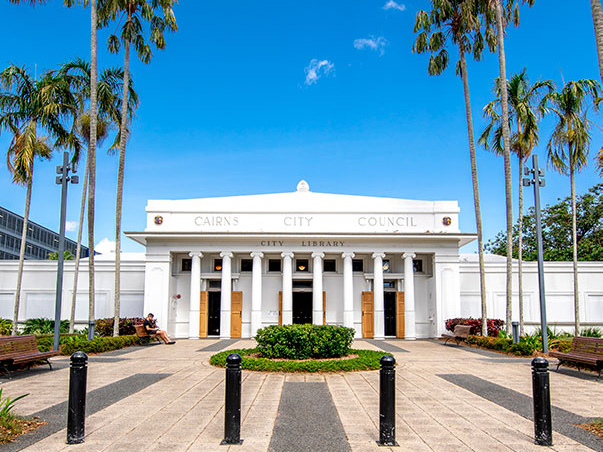
Temporary closure of City Library car park
The Cairns City Library car park will be temporarily closed from Monday 12 to Friday 16 October 2026....
9 October 2026
Get Ready Emergency Services Day
Cairns residents are being encouraged to get disaster-ready before severe weather season, with a free community event offering practical advice,...
8 October 2026
Temporary closure of Babinda Transfer Station
The Babinda Transfer Station will be closed on Wednesday 7 October to allow for the processing of green waste on...
6 October 2026