Sources & supply
Water at a glance
- Council issues water usage charges three times per year.
- We adopt a ‘user pays’ method to encourage water conservation – the less you use, the less you pay.
- A typical Cairns resident uses around 280 litres of drinking water per day.
- Residential properties pay $2.05 for 1000 litres of drinking water.
- Commercial properties pay $2.15 for 1000 litres of drinking water.
Water sources
The Cairns community is supplied with water from Copperlode Falls Dam and Behana Creek. Water from Copperlode Dam supplies areas to the north of Cairns and the Cairns city. The Behana Creek source supplies areas south of Cairns as well as the Cairns city. This raw water is treated at Council's treatment plants and then stored in our 68 reservoirs.
Council's YouTube site Water infrastructure provides a technical account (with subtitles) of water and wastewater infrastructure for professionals and specialist authorities.
Copperlode Falls Dam
Copperlode Falls Dam is the main supply of water for the Cairns Region. The dam has a total capacity of 38,400 megalitres (ML) which is approximately 15,000 olympic swimming pools. The dam is designed to capture some of our high seasonal rainfall and provides a reliable water source for homes and businesses in the region.
Behana Creek
Behana Creek provides run-of-river water extraction and is the region's second major source of water.
Rural intakes
Council also has several low volume, run-of-river water sources that supply towns and suburbs in the southern Cairns region. These include Majuba Creek, Joyce/Worth Creek, Pugh Creek, Frenchman Creek, Junction Creek, Fishery Creek, Little Mulgrave and Mick Creek.
Boil water notification
Cairns Regional Council advises that where Boil Water Notification signs are in place at public water supplies the following precautions must be adhered to for safe human consumption of the water.
Customers should bring water to a boil by heating the water until a continuous and rapid stream of air-bubbles is produced from the bottom of a pan or kettle. Kettles with automatic cut-off switches are suitable. Variable temperature kettles should be set to boil.
After heating, water must be allowed to cool before using it, and be stored in a clean, closed container for later use. Care should be taken to avoid scalding injuries.
Customers should boil all water used for:
- Drinking
- Brushing teeth
- Washing and preparing food or beverages
- Preparing baby formula
- Making ice.
Unboiled water can be used for:
- Showering and bathing (avoid swallowing water). As a precaution babies and toddlers should be sponge bathed to prevent them swallowing water
- Washing dishes by hand or in a dishwasher, providing dishes are air-dried before being used after washing
- Washing clothes.
Disclaimer
This water level data is not validated prior to publishing and Cairns Regional Council does not guarantee its accuracy.
Water Summary Report
Annual Drinking Water Quality Report 2024-2025
The Drinking Water Service Annual Report ( PDF, 5.18 MB ) describes Council’s operational performance with drinking water quality, and reports on activities detailed in Council’s Drinking Water Quality Management Plan (DWQMP).
The report outlines how Council has adhered to its DWQMP, met approval conditions, and otherwise complied with the requirements of the Public Health Act 2005.
If you would like more information about which water source supplies your suburb or to view a Monthly Water Quality Report please refer to the table below:
| Zone | Suburb | Water source | Water quality report |
|---|---|---|---|
| Bartle Frere | Bartle Frere | Majuba Creek | Bartle Frere [PDF] |
| Bramston Beach | Bramston Beach | Joyce/Worth Creek | Bramston Beach [PDF] |
| Mirriwinni | Mirriwinni | Pugh Creek | Mirriwinni [PDF] |
| Babinda | Babinda | Frenchman Creek | Babinda [PDF] |
| Bellenden Ker | Bellenden Ker | Junction Creek | Bellenden Ker [PDF] |
| Fishery Falls | Fishery Falls | Fishery Creek | Fishery Falls [PDF] |
| Mountain View/Orchid Valley | Mountain View, Little Mulgrave, Orchid Valley | Little Mulgrave | Mountain View/Orchid Valley [PDF] |
| Bessie Point | Bessie Point | Mick Creek | Bessie Point [PDF] |
| Southern | Aloomba, Bayview Heights, Bentley Park, Edmonton, Forest Gardens, Goldsborough, Gordonvale, Meringa, Mt Sheridan, White Rock, Woree | Copperlode Dam, Behana Creek | Southern [PDF] |
| Central | Aeroglen, Brinsmead, Bungalow, Cairns City, Cairns North, Earlville, Edge Hill, Freshwater, Kamerunga, Manoora, Manunda, Mooroobool, Paramatta Park, Portsmith, Redlynch, Stratford, Westcourt, Whitfield | Copperlode Dam, Behana Creek | Central [PDF] |
| Northern | Barron, Caravonica, Clifton Beach, Holloways Beach, Kewarra Beach, Machans Beach, Palm Cove, Smithfield, Trinity Beach, Trinity Park, Yorkey's Knob | Copperlode Dam, Behana Creek | Northern [PDF] |
Council undertakes an Annual Review of the Drinking Water Quality Management Plan in line with the Water Supply (Safety and Reliability) Act 2008. The management of drinking water quality outlined in the Act aims to protect public health.
The Drinking Water Quality Management Plan includes a Register of critical customers such as the elderly and immunocompromised. Cairns Regional Council’s Water and Waste Department invite those who believe they may fit into this category to apply for inclusion on the Register.
People who believe they fit into this category are invited to apply for inclusion on the Critical Customer Register by completing the Critical Customer Registration form ( PDF, 0.14 MB ).
Sometimes the chlorination and filtration system may not be able to adequately filter and disinfect the water due to storm events decreasing the quality of raw water or due to unforeseen mechanical faults. This increases the risk of microbiological contamination. Council’s Cairns Infrastructure & Assets Directorate regularly takes water samples to test for waterborne pathogens and bacteria, e.g. E.coli and Cryptosporidium which can cause illness. If the supply cannot be guaranteed as fit for use, further testing is undertaken and a Boil Water notice is issued in consultation with Queensland Health.
As the owner of Copperlode Falls Dam, Cairns Regional Council has a legal obligation under the Queensland Water Supply (Safety and Reliability) Act 2008 to have an Emergency Action Plan (EAP).
The EAP has provisions regarding the identification, detection and management of dam hazards and emergency events and how effective warnings and notifications are communicated to those potentially impacted.
Learn more about the Copperlode Falls Dam Emergency Action Plan.
Last Updated: 30 June 2026
Latest News > All News
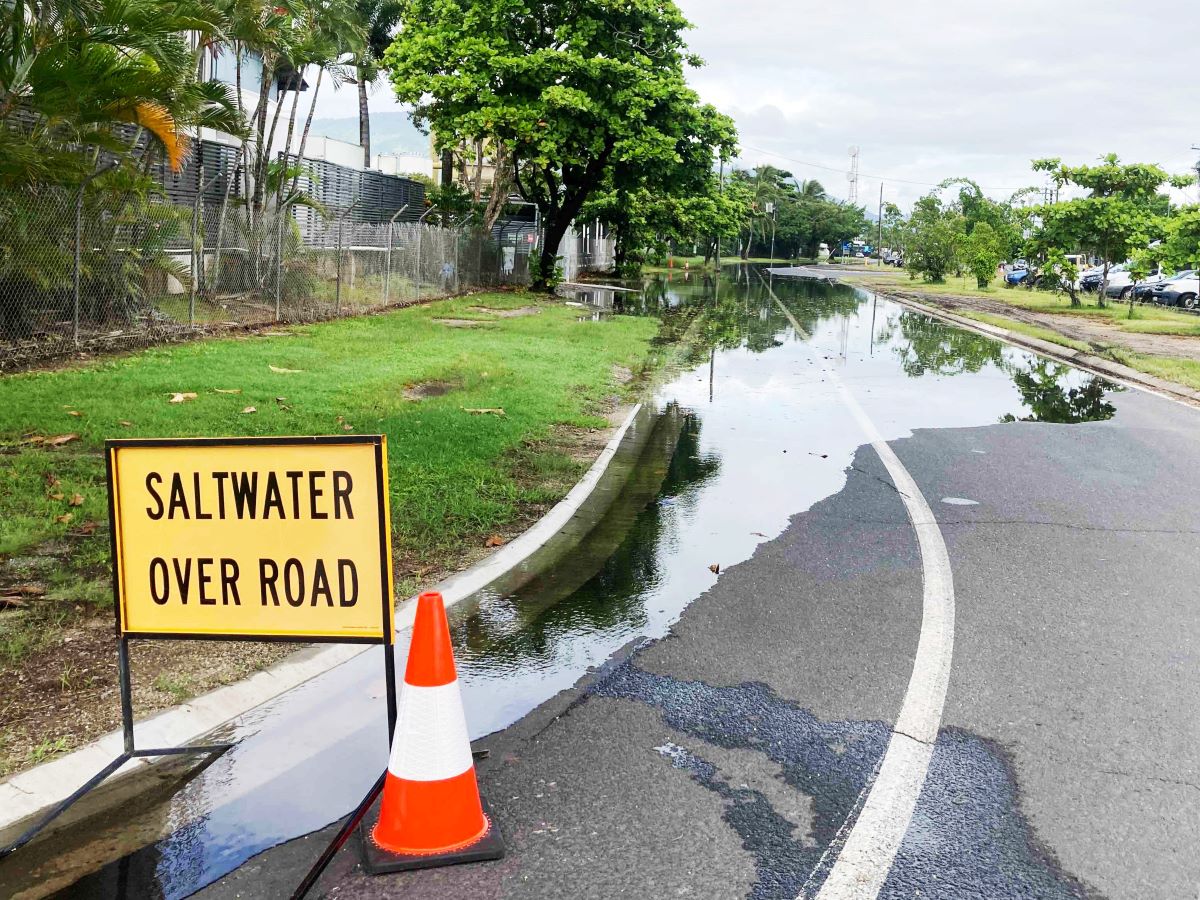
King tides expected in Cairns this week
King tides are expected to affect Cairns from Monday 26 – Wednesday 28 October.These king tides are all expected to...
26 October 2026

It's Cairns' annual cemetery clean-up time
The Cairns community is being encouraged to visit the resting places of loved ones ahead of Council’s annual cemetery clean-ups...
26 October 2026
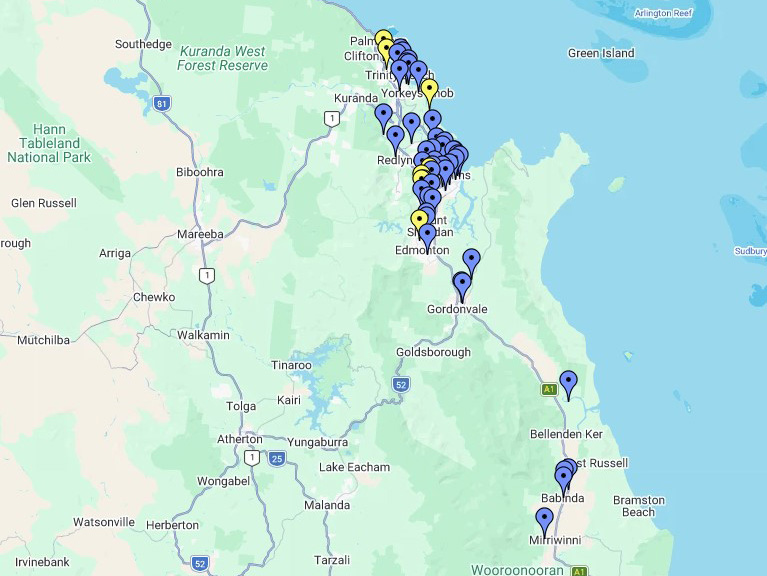
What's happening in your suburb this month?
Friendlier and safer community spaces, coastal protection and smart water meter upgrades are being delivered across the Cairns region....
22 October 2026