Our water security
This National Water Grid project is funded by the Australian and Queensland governments and delivered in partnership with Cairns Regional Council.

The Cairns Water Security - Stage 1 (CWSS1) project is a critical regional infrastructure project supporting population and economic growth, and disaster resilience in Cairns and Far North Queensland.
It will secure Cairns’ future water needs well into the next decade and has been confirmed through a detailed independent business case as the best value for money solution to the city’s water needs.
Existing funding commitments confirm there is consensus at all levels of government, across all political parties, that CWSS1 is the most viable option to provide essential drinking water for Cairns.
Thank you Queensland Government and Federal Government
The Australian and Queensland Governments have jointly committed a total of $390 million to deliver the Cairns Water Security Stage 1 project—a critical investment in the region’s future.
The Federal Government has boosted its funding by $87.5 million, bringing its total contribution to $195 million, matching the commitment made by the Queensland Government. This united investment ensures the long-term security of Cairns' water supply as the population continues to grow.
Beyond infrastructure, this funding provides substantial cost-of-living relief. The combined support from both levels of government is expected to save local households an estimated $403 per year over the next 15 years.
Council thanks Prime Minister Anthony Albanese, Minister Plibersek, Senator Nita Green - Senator for Queensland, and the Federal Government for their support.
We thank our local State members Michael Healy, and former members Curtis Pitt and Craig Crawford for their support. Also, thank you to our local advocacy partners Advance Cairns, Cairns Chamber of Commerce, RDA Tropical North, TTNQ and FNQROC for their tireless work alongside Council in helping to deliver this commitment.
Read more about the progress of the Cairns Water Security Stage 1 project.
Cairns Water Security
Council has been planning for the long-term water needs of the Cairns community for some time.
In 2015, Cairns adopted the Cairns Water Security Strategy ( PDF, 2.35 MB ), developed by Council's Water Security Advisory Group, with many initiatives implemented already to reduce water demand.
Demand management activities like water education, leak detection improvements, and effective metering and pricing, have delivered significant results, most notably a 35% reduction in water usage per capita over the past 15 years.
Timeline:
- 2015: Cairns Water Security Strategy adopted'
- 2019 – 2022: Business case confirms CWSS1 as best solution
- Q2 2021: Council endorses CWSS1 as No. 1 Advocacy priority
- Q3 2021: Support from all local state and federal members
- May 2022: $107.5 million funding commitment Federal Government
- June 2022: $107.5 million funding commitment State Government
- Q2 2023 – today: Briefings with Ministers and key stakeholders on likely cost increase
- Q4 2023: Construction contract awarded, Council reconfirms project as No. 1 Advocacy priority
- December 2023: Cyclone Jasper causes widespread damage and devastation to Cairns and the surrounding region
- May 2024: New Council reconfirms project as No. 1 Advocacy priority
- June 2024: Additional $87.5 million funding commitment State Government ($195 million total)
- mid–2024: Construction started
- January 2025: Additional $87.5 million funding commitment Federal Government ($195 million total)
- mid–2026: CWSS1 completed
Background
Constructed in 1976, Cairns’ primary water source, Copperlode Falls Dam, has served the city well. However, it can no longer meet the water needs of a growing population, expected to reach 241,000 by 2050.
Without a new water supply, Cairns faces the real possibility of a drinking water shortage by 2026.
The Cairns Water Security Stage 1 project will break ground in mid-2024 to provide a much-needed secondary supply, while increasing network resilience to respond to natural disasters.
A key part of the Cairns Water Security Strategy and confirmed as the best value-for-money solution through a rigorous business case process, the project sources water from a strategic reserve in the Mulgrave River near Gordonvale, and includes intake infrastructure, supply and mains connection pipelines, a treatment plant and reservoirs.
Adding 60ML of water per day to the network, it’s our ‘new dam’ but cheaper and with a lighter environmental footprint.
FAQs
Residential tanks for collecting rainwater are not considered effective for Cairns. Most of the rain falls within a few months, therefore a typical 5000-litre tank connected to a 300 square metre roof would meet little to none of the demands during Cairns’ extended dry season. This means they would contribute very little to reducing mains water use.
However, rainwater tanks remain an option for homeowners that could be used to substitute mains water in laundries, for toilet flushing, in the garden and other external uses.
Council has a well-established demand management strategy to help drive down water consumption, including water education, leak detection improvements and effective metering and pricing. The need to conserve water has been embraced by the community with a 35% reduction in water consumption per capita over 17 years. Council’s strategy targets a further 10% reduction by 2025, which is significantly more than Townsville and Darwin – cities that share a comparable climate.
While demand management has ensured the city’s drinking water supply meets current needs, it won’t be sufficient to accommodate the anticipated population growth of 80,000 people by 2041.
To provide for these additional residents and visitors, a new drinking water supply is needed.
The need to access an additional bulk water source is part of the long-term plan in the Cairns Water Security Strategy, but this isn’t forecast to be required until the middle of this century (post 2050).
The much-talked about Nullinga Dam and potential projects that would increase the volume of water able to be drawn from Tinaroo Dam are considerations in this regard, but they do not address the immediate problem we are facing in 2026.
We are also conscious of the need to avoid conflict with water needed for agriculture production and expansion on the Atherton Tablelands. By not drawing water from the Barron River at this stage, we are not compromising the growth of this agricultural sector which is critically important to our or region’s future prosperity.
Our community has a expressed a clear view that the protection and enhancement of our region’s natural assets (in particular the Great Barrier Reef and Wet Tropics Rainforest) are critically important to both our quality of life and future economic prosperity.
The Cairns Water Security – Stage 1 project has a significantly lighter environmental footprint than a dam as it draws on a run of river supply in the Mulgrave River.
Council is committed to ensuring that environmental flows in the river are maintained and respected to protect the river system for the benefit of the communities, fauna and flora that rely on it. The capital cost of the Cairns Water Security – Stage 1 project (estimated ($248 million) is also a fraction of that of a new dam.
The nominal upfront capital cost of Nullinga Dam was upwards of $1 billion and that did not include the infrastructure, such as mains pipelines and treatment plant, needed to integrate the project with the Cairns urban water supply network.
There are also long lead times, usually measured in decades not years, in planning, constructing and ‘filling’ dams. We cannot afford to wait this long when there is a real risk of a drinking water shortfall by 2026.
The project involves a major river intake and pumping station, long, large-diameter pipelines and a treatment plant to convert raw water to drinking water that is fit for human consumption.
These are critical pieces of infrastructure that need to perform to a very high standard – often under demanding conditions, such as flooding, and over a long period of time.
These expectations play into the resulting cost.
That being said, the project is not as expensive compared to other bulk water supply options, such as Nullinga Dam.
This Council has always aimed to deliver infrastructure as and when it is needed.
Paying for infrastructure ahead of when it is actually required means you are spending community funds before you really need to. That’s not prudent financial or capital management.
Mid 2026 is the date we have been working to and we are well advanced in project planning
This project is a core component of the Cairns Water Security Strategy adopted by Council in 2015 and we have been actively progressing it since that time.
Strategic provision within water regulations for the new water supply, land acquisition, hydrology and hydraulic analysis, procurement strategy development and endorsement, cost review and analysis, and pilot testing are all complete.
We’re on schedule for a 2026 delivery.
We are now embarking on an awareness campaign to ensure our community understands why the project is needed and the benefits it will provide.
We will also be seeking investment from the State and Federal Governments to support the delivery of this project, which will critical to the city’s future growth and prosperity.
For the Cairns Water Security Stage 1 project, Council will be seeking a maximum allocation of 7,500 megalitres each year.
This water has been set aside as part of the Queensland Government’s water plan for the Mulgrave River catchment, which is included in the Wet Tropics Water Plan.
Read letters of support and funding commitments from local representatives
Get involved
Hundreds of local businesses and organisations have shown their support by adding their logo to the project support board. You can get involved too - simply upload your business logo to:
- show your support for the Cairns Water Security Project – Stage 1
Terms and conditions
By choosing to provide Cairns Regional Council with your organisation name and logo, you consent to Council using these for purposes relating to the Cairns Water Security – Stage 1 project. These purposes include, but are not limited to:
- integrated public multimedia communications and advocacy activities (including print, digital, web and social media platforms);
- direct contact with key decision makers including members of Parliament, state and federal government departments and other agencies.
Your information will be handled in accordance with Council’s website Privacy Statement and the Information Privacy Act 2009.
Business supporters


















































































































































































Last Updated: 4 September 2025
Latest News > All News
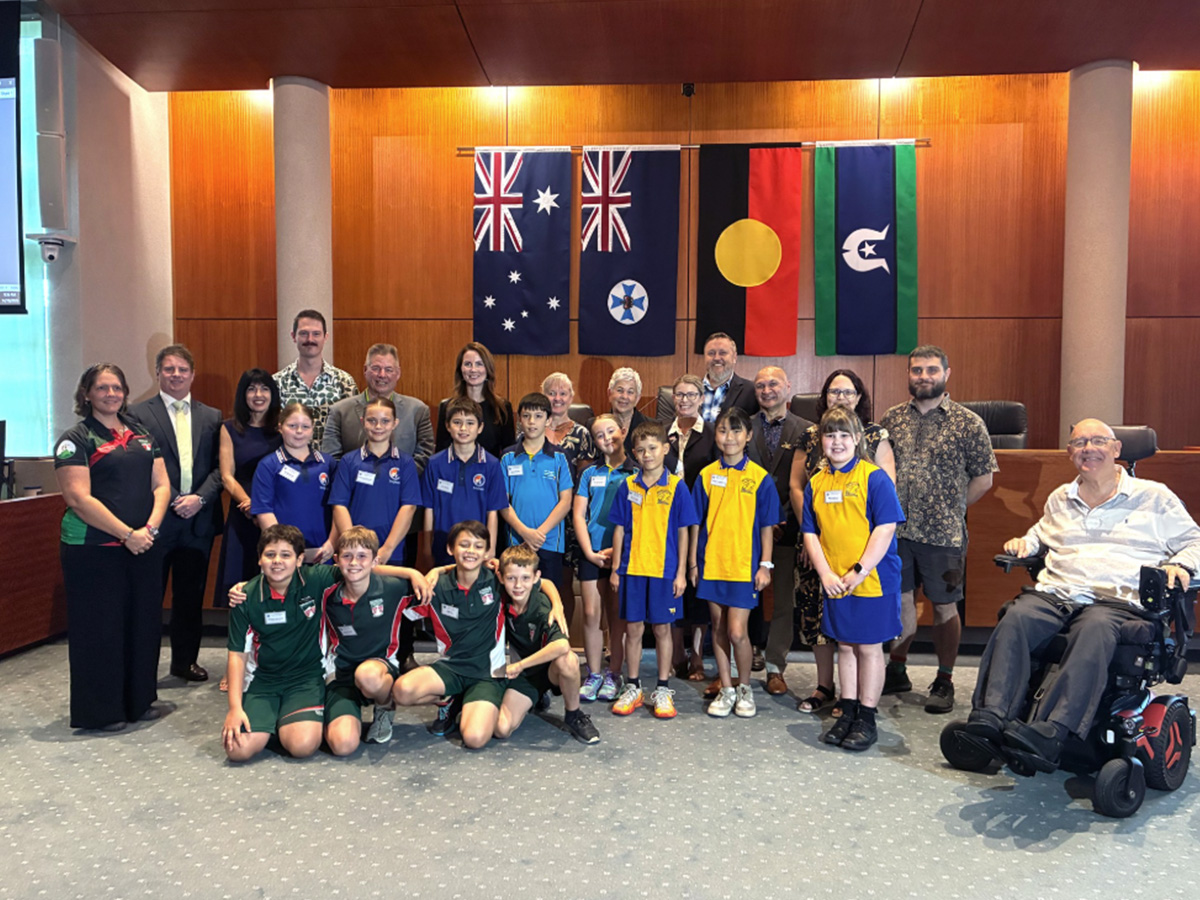
Young innovators lead the way on sustainability
Cairns' next generation of environmental leaders have presented innovative sustainability projects directly to Councillors, showcasing practical solutions to challenges ranging...
20 October 2026
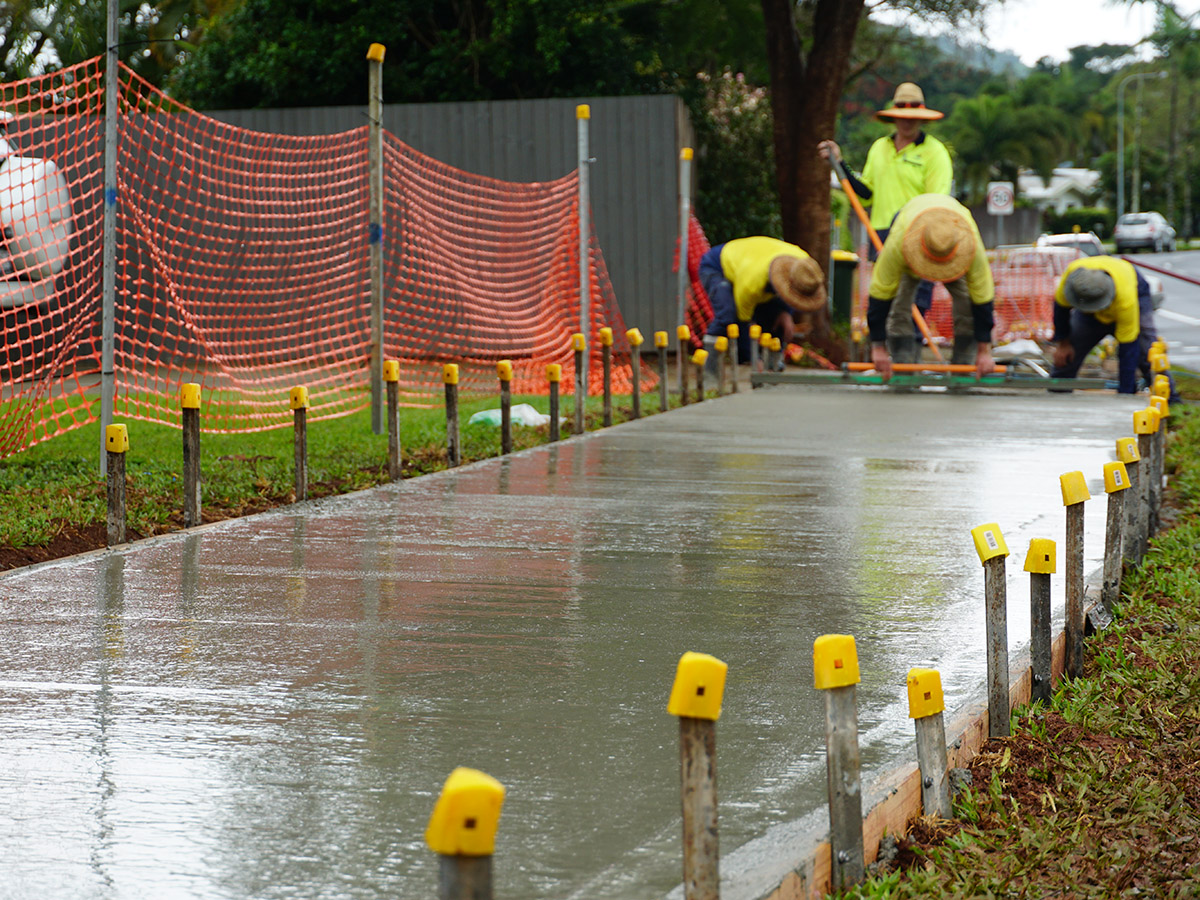
Getting active around Cairns
Active travel includes cycling and walking, and any transport that relies on human-power. Pedestrian walking paths and community footpaths provide...
15 October 2026
Regionally responsive growth at Mount Peter
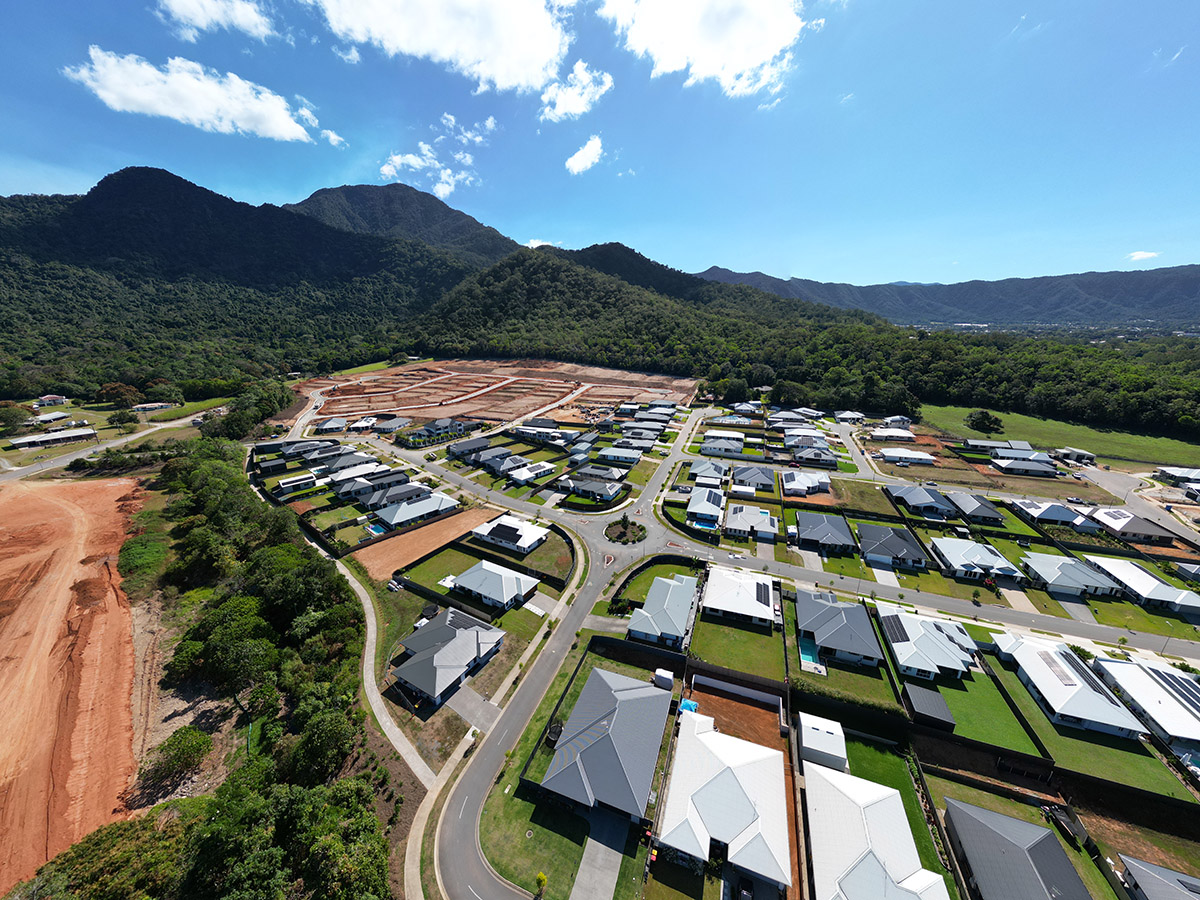
As Cairns works to address growing housing demand, Cairns Regional Council has endorsed a submission on Economic Development Queensland's (EDQ)...
15 October 2026