Rats & mice
Just about anywhere humans and their settlements are located you will find rats and mice.
The more commonly-known rat and mouse species introduced to Australia are the Norway Rat (Rattus norvegicus), the Roof Rat (Rattus rattus) and the House Mouse (Mus musculus). These animals are well adapted to living in very close association with humans, sharing their food, water and shelter.
It is important to note that the native White-Tailed Rat (Uromy caudimaculatus) is a protected species. These rats can weigh up to 1kg, have grey-brown hair with a creamy underside. Their tail is long and naked with a white end.
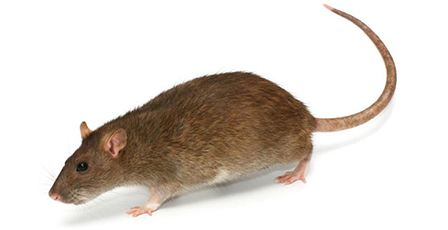
Norway rat
- Heavy set body up to 450g
- Blunt nose and small ears
- Coarse red/brown hair
- Tail usually shorter than the body and head
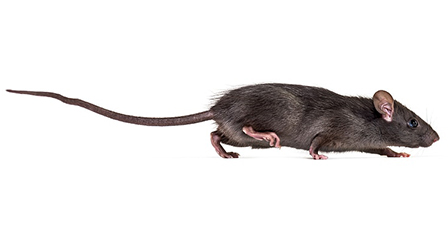
Roof Rat
- Slender body up to 260g
- Pointed nose and large ears
- Fine grey, black or brown hair
- Tail is usually longer than the body and head
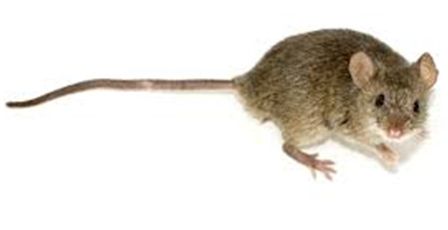
House mouse
- 7.5cm long, weighs up to 15g
- Grey, brown hair
- Body shape is pointed at one end
- Tail about 8 cm long
Rats and mice as pests
Rats and mice are responsible for enormous losses of food, either by directly eating the foods or by rendering them inedible through contamination. Rats and mice are also known to eat and damage fruit and other crops growing in home yards.
Rats and mice may carry disease causing organisms such as Leptospirosis, Salmonella typhus and ringworm.
Rats and mice can cause serious physical damage to a range of materials. They can damage doors, skirtings and other parts of buildings, upholstery, books, wires and cables as well as food containers or packaging and parts of equipment and machinery.
For any further enquiries, please contact Council's Licensing and Compliance team on 1300 69 22 47.
Identify the signs!
- Visual sightings
- Droppings
- Sounds of gnawing, scuffling, squeaking
- Urine stains often appearing like sprinkles over the areas travelled on
- Urinating pillars – long term activity of mice sometimes leads to a build-up of urine, grease, dirt and dust to form small mounds
- A beaten path where they have developed a “run” that leads to their shelter
- Greasy marks along the paths they travel
- Burrow holes around buildings
- Physical damage cause by gnawing
- Food that has been eaten or has gone missing
- Pets that are more excitable than usual
Control measures - what can you do?
- Block possible entry points into your dwelling.
- Seal holes, gaps, skirting boards and cracks under doors.
- Ensure access doors under the house are tight fitting.
- Clear your house and land of rubbish, timber and building material.
- Keep lawns short, maintain vegetation, remove garden refuse.
- Keep your garage and shed neat and tidy.
- Repair any holes or other access points around buildings, fences and concrete slabs.
- Remove sources of food that may attract rats and mice.
- Hygiene is important. Keep living areas neat and tidy.
- Clean up food scraps and place in a sealed bin.
- All food should be kept in a fridge or sealable containers.
- Pick all fruit from trees, remove dropped fruit from the ground.
- Ensure pet food is not left outside for extended periods of time and is stored securely.
- Compost needs to be spread with a covering of lime and soil or stored in a sealed bin.
- Waste storage areas need to be kept clean and sanitary.
- Bird cages/aviaries should be well maintained.
- Be aware that vegetable patches may attract rodents.
- Baits are available at supermarkets and hardware stores. Place large quantities of bait in one or two locations where rats and mice frequent (such as under cooking equipment, behind fridges or along their routes of travel).
- Bait for at least 2 weeks to reduce rat numbers. Most deaths occur around 7 days after consumption but may take as long as 2 weeks.
- Wax blocks may be used externally as they are waterproof baits. These can also be nailed to wooden fences.
- Other physical methods such as live traps and electronic devices which emit electromagnetic pulses (unproven) could be used.
- Traps using unconventional methods are also available.
- Employ a licensed pest control company if the problem cannot be easily contained.
- Ensure you understand and follow all safety directions provided by the manufacture and associated Safety Data Sheet.
- Extreme care must be taken to avoid accidental poisoning (including secondary poisoning) of humans and non-target species.
- Always wash hands thoroughly with soap and water after contact with bait.
- Do not allow bait to contaminate foods intended for human consumption.
- Ensure baits are not accessible to children, dogs, cats, native animals or poultry.
Regulations
The Public Health Regulation 2018 sets out requirements to help prevent the health risks posed by rats and mice.
This regulation stipulates that an owner of a relevant structure must take reasonable steps to stop rats and mice entering the structure. There is also a requirement to ensure rats or mice do not live or breed on land around a dwelling.
It is unlikely that these pests will ever be eradicated completely from an area, however through education and control methods, rat and mice numbers may be effectively controlled.
Last Updated: 19 March 2026
Latest News > All News
What's happening in your suburb this month?
Friendlier and safer community spaces, coastal protection and smart water meter upgrades are being delivered across the Cairns region....
22 October 2026

2027 Australia Day Awards nominations open
Every year, Cairns Regional Council recognises how important it is to acknowledge the people around you who are making a...
22 October 2026

Young innovators lead the way on sustainability
Cairns' next generation of environmental leaders have presented innovative sustainability projects directly to Councillors, showcasing practical solutions to challenges ranging...
20 October 2026